
Bridge Michigan Issues Summit, investigating the paranormal at Eloise Asylum
Season 11 Episode 18 | 26m 46sVideo has Closed Captions
A recent summit addresses issues that matter to Michigan, and we take you inside haunted Detroit.
Bridge Michigan holds its first Issues Summit focusing on topics that will impact the state’s future. Plus, Halloween is almost here! We’ll take you inside one of the Detroit area’s haunted attractions: Eloise Asylum in Westland.
Problems playing video? | Closed Captioning Feedback
Problems playing video? | Closed Captioning Feedback
One Detroit is a local public television program presented by Detroit PBS
Bridge Michigan Issues Summit, investigating the paranormal at Eloise Asylum
Season 11 Episode 18 | 26m 46sVideo has Closed Captions
Bridge Michigan holds its first Issues Summit focusing on topics that will impact the state’s future. Plus, Halloween is almost here! We’ll take you inside one of the Detroit area’s haunted attractions: Eloise Asylum in Westland.
Problems playing video? | Closed Captioning Feedback
Where to Watch One Detroit
One Detroit is available to stream on pbs.org and the PBS app.
Providing Support for PBS.org
Learn Moreabout PBS online sponsorship- Coming up on "One Detroit," Bridge Michigan holds its first Issues Summit, focusing on the topics that will impact the state's future.
Plus, Halloween is almost here.
We'll take you inside one of the Detroit area's haunted attractions, Eloise Asylum in Westland.
(bell chimes) It's all coming up next on "One Detroit."
- [Narrator] Across our Masco family of companies, our goal is to deliver better living possibilities and make positive changes in the neighborhoods where we live, work, and do business.
Masco, a Michigan company since 1929.
Support also provided by the Cynthia & Edsel Ford Fund for Journalism at Detroit PBS.
- [Narrator] The DTE Foundation is a proud sponsor of Detroit PBS.
Through our giving, we are committed to meeting the needs of the communities we serve statewide to help ensure a bright and thriving future for all.
Learn more at dtefoundation.com.
- [Narrator] Nissan Foundation, and viewers like you.
(relaxing ambient music) - Hello, I'm Chris Jordan, and this is "One Detroit."
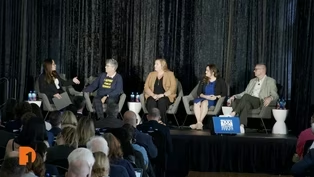
A recent summit presented by the nonprofit, nonpartisan online news organization, Bridge Michigan, took a look at the issues that matter most to residents.
Civic leaders, policymakers, subject matter experts, and the community came together to hear conversations led by journalists on topics that included healthcare, the environment, education, and the economy.
Detroit PBS was a media partner for the Issues Summit and live-streamed the event.
Here is a portion of the discussion about early literacy and the state's future workforce.
(relaxing ambient music) - We've got a lot of problems in the state and a lot of challenges ahead of us.
More than a fourth of students are chronically absent.
Just about a fourth are college-ready according to the SAT.
And our reading scores are constantly in the news, not just in Bridge, but also in national outlets because a lot of people agree we can do better.
So, we've got a great panel here to talk about all of these things.
- We have seen a change in households, in families, and that has led to a needed change in K-12 and higher ed, and I would argue the workforce as an employer.
It is hard to culturally adjust to that using old models, old amounts of money, old school books.
We as a system need to change for that while we're also locking every door of the school as a building to protect our kids, whereas schools used to be community hubs where we would invite businesses in and parents in.
And, you know, just for me to drop off rubber bands for my kids' braces last week, I basically had to give a blood sample to get in the room.
And I don't blame schools for that because we see what happens when that doesn't happen, but we've got this mix where the school has to perform more like a community resource while also locking itself away from the community.
If we can find more ways to bring the community in so we can serve whole families within that building, I think we get to helping the whole family, which helps the student, which helps the community, helps the school, helps the workforce.
- Judy, you just talked about this.
Just earlier, we were talking about school funding.
We were talking about concerns with funding your schools.
When you're looking at your schools, what are the top three issues that your students or your teachers are facing?
- So, I think obviously school safety, right?
Kids deserve to feel safe in school.
And I'm sure that for many of our families, especially with the news lately, you know, when I'm dropping my kids off in the morning, you know, what will happen during the course of the day?
So I think, obviously, safety and security.
I always say I have two jobs as superintendent, keep everybody safe and keep everybody learning.
And you can't learn if you don't feel safe.
So, I would say in the second piece is continuing to have rigorous teaching and learning in every single classroom, which I think we do a really great job at.
And I think number three, to Ryan's point, is how do we come together as a community?
Because it sounds trite, but literally, the things that unite us are far greater than the things that divide us.
And it's very hard to shut out the noise, but that's our job to do that.
- I'm curious, if you have been following the news, you probably know we're now mandating the science of reading training for teachers.
We have new money for curriculum.
We're expanding pre-K, all things hopefully that will lead to better reading scores across the state.
But I also know it's gonna take a lot of time to train these teachers.
It's gonna take money to train these teachers.
Danielle, does this moment in Michigan feel any different than all the other times Michigan has tried to improve reading scores?
- For me, it feels different.
One of the things that I have noticed politicians quoting recently is the Mississippi Miracle, which some of you may be familiar with.
And in Mississippi, certain parameters were put into policy that helped Mississippi be successful in their reading scores in fourth grade over the course of 10 years.
One of the things that politicians keep saying is, "Just implement the Mississippi Miracle."
Well, I'm here to tell you that is what those laws are doing and, in fact, that Michigan is trying to do them better.
Instead of reaching K-3 students, we're working to reach K-12 students and bridge that gap for our secondary learners.
We're including dyslexia as a major component of the law, which was not addressed specifically in the Mississippi bill.
Additionally, we're looking to make sure that we target interventions and screenings and data and evidence-driven ways in a way that also supports what educators are learning as part of that law.
Educators are required K-5 to have science of reading training.
And this is something that I, and you spoke about which sort of brought me here today last October, was the LETRS training that is currently on the table.
That is the name of the two-year long, unpaid, 120-hour teaching credential that involves getting teachers trained in what's called the science of reading.
And the science of reading is not a curriculum.
It's not a philosophy.
It is literally the evidence and data about how children learn how to read, and so Michigan is now requiring that teachers of reading have that experience.
And so, when you do dig into the data or the studies, there is a lot more evidence that these programs do work when implemented with fidelity, when they are supported by evidence-based curriculum, and they are addressed through multi-tiered systems of support when students are identified as having reading difficulties.
So, I think that's how we are trying to expand that focus and why I'm excited about what's to come.
It does take time, but I think it is worth the investment.
- Vanessa, you've been at the state.
You've been in the advocacy space now.
Can we make this happen?
- The short answer is yes, but I'm gonna put a big asterisk by yes and I'm gonna put us all on blast about this.
Here's what Michigan loves to do.
It's just what Isabel said.
We're like, "Wow, we've got a problem.
Let's study it."
And then we say, "Okay, guys, we gotta do the system.
We gotta do what Mississippi did, is they picked a goal and they stuck with it for 10 years."
And everybody says, "Yep, totally.
We're on board."
Until it's time to be on board that one plan, until it's time for your part of the system, our part of the system to do the plan and not say, "Well, maybe I got a better plan or, like, I talked to somebody on Tuesday on the street and they have a better plan.
Let's, like, do their plan."
So, yes, we can do it, but we have to be really honest about the fact that Michigan starts and stops and starts and stops and starts and stops, and we let politics come in.
We make policy competitive and not collaborative, and who pays for that is our kids.
- How are students suffering from this flip-flop that we're doing?
- You know, I think my job as a superintendent, again, as I said, to kinda keep that noise out, right, and to support our teachers to do... They're trained, they're educators.
And yes, I have some staff LETRS-trained.
We'll continue to do that.
We now have another option as well that just came out from MDE this week for training, which is a little bit shorter than the LETRS training.
And so, I think it's saying to teachers, like, "We're gonna roll up our sleeves and be there elbow to elbow with you in this work," right?
And so it's not my job to sit in my office and go, "Go do," right?
It's my job to have bold leadership and to be in the trenches with them.
And even though I wasn't an ELA teacher, you know, to do the best I can to understand those pieces of it so that I can best support them.
But it does feel like a lot of fits and starts over my career.
- What's at stake if we don't get our early learners ready on time?
- The world.
(panelists chuckle) (audience chuckle) Is that good enough?
- It's not a trick question.
(panelists laugh) Do you wanna expand?
- No, everything, right?
Our businesses right now are demanding talented and trained workers.
And even though there's a lot of bad advice from well-meaning and some not so well-meaning adults that college doesn't matter anymore, the business owners are telling us that that's hogwash.
It does matter.
It might not be a four-year degree, but we also need four-year degrees.
We need associate's degrees.
We need certificates.
We need all of those things.
What we need less of is people not going to some sort of training in college after high school.
And so, if we don't get our act together and we don't fix these systems, fewer people are going to get training.
We will end up importing talent from other states and other countries.
And our residents, our folks who went to school here and were born here are going to be on the welfare rolls.
They're gonna be the ones who are needing support and not the ones who can engage and create the community that they live in, and I don't think that's what we want.
- Judy, did you have something to add to that?
- Well, you know, I was thinking about that, and you know from our chats that our district has, even though we're small and rural, I am a firm believer that a school's master schedule is a reflection of their values.
And so, in our middle and high school, we have created 30 minutes every day where kids can do choice reading, because why should that stop in fifth grade, right?
And if we wanna build the love of reading with kids, we've got to give them opportunities to read what they want to read, and so we have that built into our schedule.
We're in our third year this year, and it does do other things.
It builds reading stamina.
It does other things as well for the kids.
We also, two of those five days, if you need a just-in-time intervention, a teacher can pull you for that because there's not always the ability in high school to be after school or to do something at lunch 'cause we wanna provide those social opportunities for our kids as well.
Our teachers read during that time.
And so, we can't just say we're building readers.
We have to be readers.
And that all goes into... There's not a job I can think of that you don't have to be able to read, right?
And so we can't just stop that at fifth grade.
That's gotta be a pre-K-12 piece.
- And a shout-out to our audience.
One of the reasons we recently did a story about what happens when a middle schooler or a high schooler can't read is because we were getting questions from you all saying, "Hey, I know we don't have a third grade gate anymore where if you don't read on third grade level, you get held back, but what happens to those older grades?"
And when I called Judy, Judy was like, "I've got silent reading time, but I also need more support."
Correct me if I'm wrong here, but that the support that you're putting in place, you would still love more, is that right?
- Absolutely, because there's a weird certification called Reading Specialist that secondary teachers can get.
There are very few in the state of teachers that even have this.
I've only known two teachers in my career that have this at the secondary level, but to do a big intervention in middle school or high school with a student who is not just not reading at grade level, but has some severe issues and not disability related, but just for whatever reason is not where we would want them to be, those people are few and far between.
And by the state, I can't even run a class without that person with that certification, right?
So sometimes that red tape and that bureaucracy really gets in the way of us trying to help kids.
And I think I said to you when we talked that day when you said, "What happens when a kid gets to middle school and can't read?"
And I said, "That's the dirty little secret," right?
That that's the thing that we pretend that by fifth grade, everybody's exactly where they should be, and after that, play catch-up.
And I don't believe that.
I mean, there's a lot of reasons kids aren't at grade level.
- And you can see the entire Issues Summit on Bridge Michigan's YouTube page.
Let's turn now to Halloween.
Eloise Asylum, one of the Detroit area's haunted attractions, is open through November 1st.
The Halloween destination is filled with history, horror, and paranormal activity.
I visited the former asylum last year with my colleague, Andrea Riley.
We got the backstory on this haunted destination from a local historian and a paranormal investigator.
A warning, some of the images you are about to see may be frightening.
(relaxing ambient music) (bell chimes) - What are you thinking, Danny?
We're gonna try to get you to talk with us, okay?
- Yeah.
(bell chimes) - You know these ain't gonna hurt you.
You know you've talked to me (bell ringing) before through 'em.
(bell chimes) (spirit box buzzing) (bell ringing) Who's ringing the bell?
- [Entity] Me.
(bell chimes) (bell chimes) (spirit box buzzing) - [Kenneth] Who's ringing the bell?
- [Entity] Me.
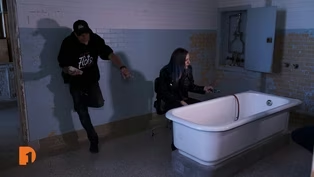
(bell chimes) (bell ringing) (spirit box buzzing) - [Chris] Eloise Asylum, the notorious psychiatric hospital in Westland on Michigan Ave, which is often said to be among the state's most haunted places.
- Just like the living, they have characteristics about 'em that just make them individual.
Some of them tend to move very quickly.
Some of them tend to be a little grouchy.
- I've seen shadow figures.
I've had equipment physically moved and manipulated.
I've been touched.
I've been grabbed.
I've had things whisper in my ear.
- [Chris] Eloise Asylum opened in the 1830s, a complex the size of a small city, which, at its most crowded during the Great Depression, housed about 10,000 people at a time.
- It actually started as a poorhouse in Hamtramck in the early 1830s.
And it was in that location in Hamtramck for a couple of years, and there was a cholera pandemic or epidemic that had gone through at the time, and that really caused an increase in the admissions and the number of people that were being seen there.
And within a couple of years, they realized that they were going to need to upgrade and move somewhere else.
At the height of operations, it was more than 70 buildings across more than 900 acres.
It was enormous.
We were pioneering in the field of X-ray.
We had one of the first diagnostic X-ray machines in the country, so people came from Ann Arbor and Detroit and Chicago for diagnostic X-rays here.
- [Chris] Its long history also has darker chapters.
Numerous patients admitted to the psychiatric hospital died there.
It is estimated that over 7,000 people are buried in unmarked graves in the asylum cemetery.
- The biggest problem that was usually reported and is documented in our historical records is overcrowding, overpopulation, not having enough staff.
When we first started in the 1830s, we had no modern understanding of mental health conditions or psychiatric disorders.
There were still a lot of, like, spiritual and supernatural connotations associated with it, so a lot of these people were just confined to cells that were in the basements of different buildings, and they were literally just chained to the walls and forgotten about because we, as a society and culture, we just didn't know what else to do with them, right?
And then we started developing some of these other techniques, electroshock therapy, insulin shock therapy, hydrotherapy, music therapy.
Even though we may now think of some of these treatments as being, you know, barbaric or archaic at the time, they considered it to be, you know, cutting-edge technology.
- [Chris] Eloise closed in the 1980s.
Now, it operates as a haunt during the Halloween season, and historical tours and paranormal investigations are conducted throughout the year, a unique place where the art of fictional scares meet genuine reports of the paranormal.
- So, we have two different attractions in our haunt.
We have the first level, which is our asylum level, and then the second level, which is the sub-level.
And the asylum level is actually kind of the experience of coming through an asylum.
You come in, you see the day room, you get checked in.
And then towards the end of the asylum, you find our max-security ward where the patients have started going a little haywire.
- [Person] Shut up.
(hose hissing) (indistinct) A little bit.
- [Raymond] And then after that, we moved down into the sub-level, which is kind of more of a sci-fi experimentation area.
- [Scare Actor] Well, well, well!
What are y'all doing back here all by yourselves?
- As you're going through the haunted house, not only do you have the actors scaring you.
You have the animatronics giving you stuff, getting loud noises pushed at you, bright flashing lights, (scare actor cackling) fog and all that.
There's the extra activity that we can't even plan for or account for that will definitely happen throughout the haunt still.
- What is that extra activity?
Like, what kinds of actually ghostly or paranormal things have happened to you, the staff, the people walking through?
- When I was first an actor, you know, just in my scene for the night, you hear the same soundtrack over and over, so you know what cries and what wails and things like that that, you know, you hear- - Hiya.
- Throughout the night every night.
And then sometimes, there's extra sounds that you're not sure of if that's part of the track or if that's something else that might be visiting us for the time being.
Other times, we have actors that, at the end of the night, have scratches on them.
We've had actors show up with bite marks the next day.
- [Chris] Have you experienced anything paranormal here yourself?
- Hm.
Random chills.
(alarm blares) (shudders) I guess.
You?
- I've heard footsteps and seen nobody there.
And then I've heard a lot of the animatronics go off, but nobody's there.
- Down in the basement, a few motion sensor lights have gone off.
It's supposed to trigger when someone walks through the haunt so we know when to jump out.
No one's showed up at all, and sometimes they'll get stuck repeating.
- [Chris] Have you had any paranormal experiences while you're working here?
- All the time.
Almost every day if I can count it.
Little taps on the shoulders, whispers, some footsteps behind me.
- [Chris] How about you?
- I am the paranormal, baby.
- I've gotta wonder, you know, what spirits who are here might, you know, find a haunt in their home annoying or disrespectful, and what spirits might, you know, get into it and kinda vibe off the energy or what have you.
(chuckles) - So, from what I've heard from most of our paranormal team, they actually generally enjoy the presence here and the fact that we're bringing energy back into the building and bringing people around and doing stuff and, you know, making it a lively place again.
- You're a paranormal team.
You wanna go in after the haunted attraction shuts down.
- Right.
- I think that energy that builds up and everything- - [Chris] My Detroit PBS colleague, Andrea Riley, spoke to paranormal investigator Kenneth "Ace" Taylor before joining him on an investigation.
Baby Benny is the mascot of Ace's paranormal investigations and a trigger object for spirits to interact with.
- I didn't pick this field.
I basically, as long as I remember, experience, felt things that normally other people kinda didn't.
I'd see things and I'd just pretty much ignore it.
It wasn't something I really wanted to pursue.
It wasn't a horrible, but I probably considered it more of a curse than a gift until, you know, much later in life.
And this building actually, the Eloise, it just drew me into like, "Wow, you know, what is this place?
Why am I feeling the way it's feeling?"
And my first visit in here was just overwhelming.
It was amazing, the feelings I had.
I was getting a lot of, like, "hi"s and "help"s and things that were kinda really that, but I had planned on, you know, I did have a camera and captured my real first apparition photograph of an individual.
I just think they're passed-on living people.
- Yeah.
- I mean, I've interacted with them too much for too long.
Most of the time, you feel their presence.
I mean, you know, nobody has to be super gifted.
Nobody has to be a medium, has to be, you know, sensitive or everything.
That's what I tell people, especially in the tours and stuff like, "Trust your instincts."
- So, the places you're going to take us, what spirits do you expect us to encounter and what should we expect from them?
- The one room in particular, back in the very beginning, there was junk and furniture and stuff all over the place.
We had put that sofa bed in there, and immediately, this is my friendly grouch that I call- - (chuckles) I love that.
- Seemed to take possession of that bed.
All of a sudden, like, when people would be sitting on it, we would be getting like, "Get up.
Get off.
(bell chimes) Mine."
But mainly "Get out.
Get up."
I can tell usually when he's in there.
- Yeah.
- He stands in one certain corner generally.
Two years ago, we had a group that they were actually starting a local magazine, and they wanted to come in here with a film crew, and we went in that room.
I did sense he was there.
He had what I call marked an individual before, which basically is, people would call it a scratch.
- Okay.
- Got her twice.
Boom, boom.
- Twice?
(Andrea speaking faintly) - [Chris] While none of us got scratched, we did get a lot (bell chimes) of instrument activity in the room, including the dead bell, which rings in response (bell chimes) to electromagnetic field activity, which spirits are said to be able to manipulate.
- Do you remember how we can ask you questions about yes (bell chimes) for ring it once, or no, ring it twice?
(bell ringing) (bell chimes) - [Andrea] I think that's a yes.
(bell chimes) Yes.
- [Chris] A spirit box is a white-noise radio through which spirits may be able to speak.
When Ace turned his on and asked who was ringing the bell, all of us heard a voice say, "Me."
(spirit box buzzing) (bell chimes) - Who's ringing the bell?
- [Entity] Me.
(bell chimes) (bell ringing) (spirit box buzzing) Do you remember who I am?
(spirit box buzzing) (bell chimes) Are we in your room?
(bell chimes) (spirit box buzzing) Are you okay with us being in here?
(bell chimes) (spirit box buzzing) I'm gonna shut this one off (bell chimes) and I'm gonna try another one, okay?
(spirit box buzzing) I'm going to shut this off in five, four, three, two- (bell ringing) - [Entity] One.
(spirit box buzzing) Three, two- - [Entity] One.
(spirit box buzzing) So it is you.
(bell ringing) You don't want me to shut that off, do you?
(spirit box buzzing) (people chattering) - [Chris] Later, after our trip through the haunt, when we were interviewing the actors, (hose hissing) something started setting off one of the sound effects in an area of the haunt that was unattended.
- Can you hear that alarm that's going off?
- [Chris] Yeah.
- That has to be pressed by someone, yet no one is back there.
Why is it going off?
- I came over here to check it out and see if it was some wiring issues or, you know, see if it was a technical problem.
I pulled out my flashlight, leaned in to look at it, and it stopped.
I didn't touch a single thing.
Normally, it's a button (alarm blares) that needs to get pressed to activate that, and it just stopped.
(alarm blares) (alarm blares) And there it goes again.
- [Chris] Was it a spirit (alarm blares) having a bit of fun with us, or is there a more natural explanation?
We can't be sure, but it was a very interesting end to our evening at Eloise Asylum.
(alarm blares) That'll do it for this week's show.
Thank you for watching.
Head to the "One Detroit" website for all the stories we're working on.
Follow us on social media and check us out on the PBS app.
(relaxing ambient music) - [Narrator] Across our Masco family of companies, our goal is to deliver better living possibilities and make positive changes in the neighborhoods where we live, work, and do business.
Masco, a Michigan company since 1929.
Support also provided by the Cynthia & Edsel Ford Fund for Journalism at Detroit PBS.
- [Narrator] The DTE Foundation is a proud sponsor of Detroit PBS.
Through our giving, we are committed to meeting the needs of the communities we serve statewide to help ensure a bright and thriving future for all.
Learn more at dtefoundation.com.
- [Narrator] Nissan Foundation, and viewers like you.
(relaxing ambient music) (gentle piano music)
 New
Experts discuss education, literacy and the 21st century workforce at Bridge Michigan Issues Summit
Video has Closed Captions
Clip: S11 Ep18 | 10m 57s | Education experts discuss factors affecting early literacy and the importance of addressing the issu (10m 57s)
 New
Haunted Detroit: Ghost hunting at Eloise Asylum
Video has Closed Captions
Clip: S11 Ep18 | 12m 21s | Eloise Asylum is a Halloween Haunt destination. (12m 21s)
Providing Support for PBS.org
Learn Moreabout PBS online sponsorship New Episode
- News and Public Affairs

Top journalists deliver compelling original analysis of the hour's headlines.

- News and Public Affairs

Today's top journalists discuss Washington's current political events and public affairs.




 New Episode


 New Episode
 New Episode



Support for PBS provided by:
One Detroit is a local public television program presented by Detroit PBS